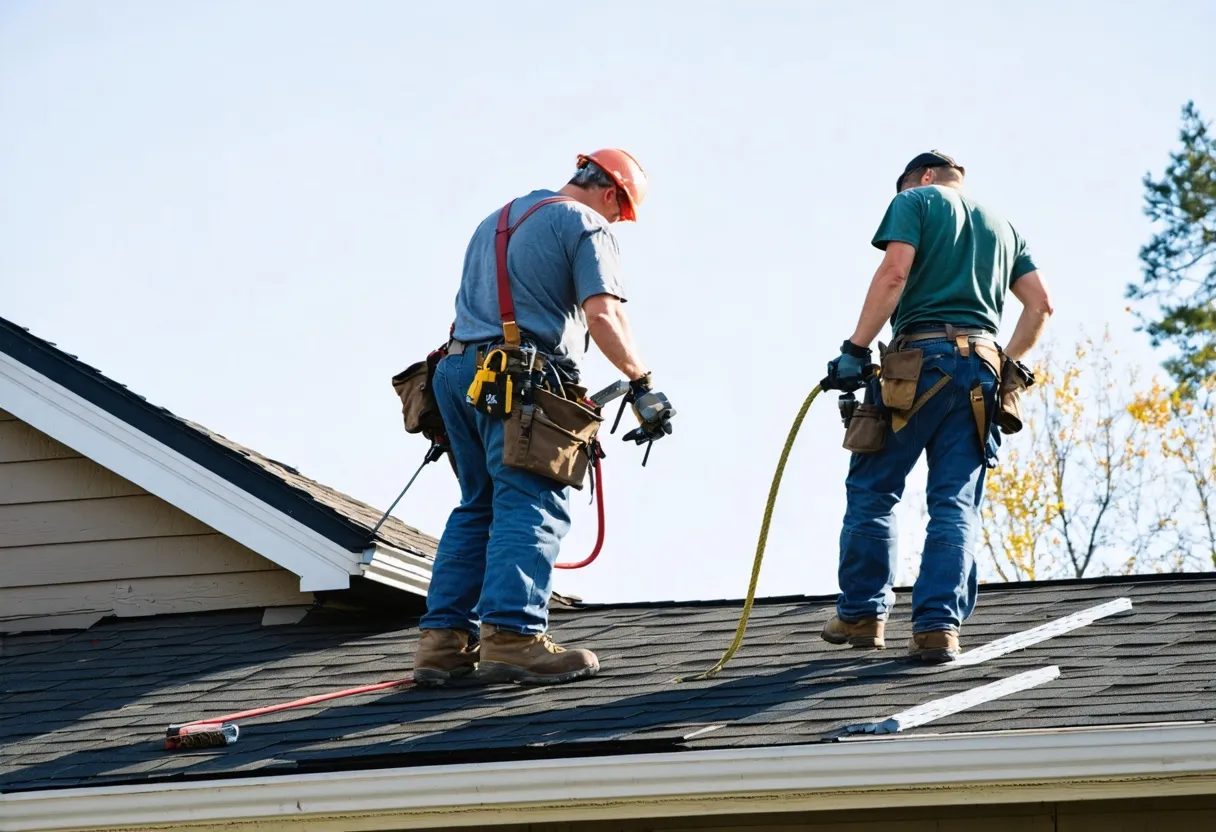
A missing shingle at 11 p.m. during a February thaw isn't just an inconvenience — it's an open door for meltwater to seep into your roof deck, refreeze overnight as temperatures drop back below freezing, and split the plywood along its grain before your morning coffee is even brewed. That's the physics of an Inland Northwest roof failure, and it's why emergency roof repair in Spokane has to be judged by how fast a crew can stop water intrusion and stabilize the structure, not just how quickly someone picks up the phone. We run 24/7 roof repair dispatch built around this region's freeze-thaw cycling and its long, smoke-heavy summers, because a roof that fails here fails for reasons a generic national roofing script doesn't account for.
Whether a windstorm peeled back a section of shingles overnight, a chimney flashing let go during a hard freeze, or a summer thunderstorm drove hail through an aging membrane, same day roof repair in Spokane means getting a trained technician on your roof, a leak source diagnosed, and a watertight temporary or permanent fix installed before the damage compounds. This page covers exactly what that involves, what it costs, and how to tell the difference between a contractor who understands Eastern Washington roofing and one who's just passing through.
What Emergency Roof Repair Covers
Emergency service isn't a single fix — it's a category of response built around speed and damage control. Depending on what's happened to your roof, our emergency scope typically includes:
- Active leak diagnosis and repair — tracing water intrusion back to its actual entry point, which is often several feet from where the stain shows up inside
- Emergency roof tarping — securing exposed decking with reinforced tarps and mechanical fastening so wind and precipitation can't get underneath
- Storm and wind damage repair — replacing torn-off shingles, resecuring lifted metal panels, and repairing broken flashing after high-wind events
- Hail and impact damage assessment — checking for bruised shingle mats, cracked tile, and dented metal that may not leak immediately but will fail within a season
- Structural stabilization — temporary decking support when water intrusion has softened sheathing, to prevent a localized leak from becoming a collapse risk
If your damage came from a specific weather event, our storm damage roof repair team handles the insurance-facing side of that work alongside the physical repair, which matters more than most homeowners expect until they're mid-claim.
How the Emergency Repair Process Works
1. Phone Triage
When you call, we ask what you're seeing — active dripping, a visible hole, missing material, a sagging ceiling — and how long it's been happening. This lets us bring the right materials on the first trip instead of diagnosing on-site and returning later, which matters when a storm cell is still moving through the area.
2. On-Site Assessment
A technician walks the roof (or inspects from a lift or drone if conditions are unsafe — ice, high wind, or steep pitch) to find the actual failure point. On older Spokane roofs, the visible damage and the actual leak source are frequently in different locations, because water travels along the underlayment and rafters before it drips through drywall.
3. Stop-the-Bleeding Repair
If a full permanent repair can't happen immediately — say, at night, during active precipitation, or while parts are sourced — we install a mechanically fastened tarp or peel-and-stick membrane patch rated to hold through wind and freeze-thaw cycling until permanent work can be scheduled, usually within 24 to 48 hours.
4. Permanent Repair or Escalation
Once conditions allow, we return to complete the permanent fix: replacing damaged shingles or metal panels, rebuilding flashing details, or patching membrane. If the assessment reveals damage beyond a spot repair — widespread granule loss, rotted decking, or a roof past its practical service life — we'll say so plainly and walk you through standard roof repair versus replacement options rather than upselling a full tear-off you don't need.
Materials Matter More in This Climate Than Most Places
Eastern Washington roofs go through dozens of freeze-thaw cycles every winter, and dry, smoke-heavy summers bake UV-degraded material even faster. That combination is harder on roofing systems than either extreme alone, and it changes which materials — and which repair techniques — actually hold up.
- Asphalt shingles — the most common residential material in the region. Repeated freeze-thaw cycling causes granule loss and mat brittleness faster than in milder climates, which is why matching shingle age and exposure matters during a spot repair; a mismatched patch can telegraph and fail again within a year.
- Metal roofing — standing-seam and corrugated panels handle snow load and wind uplift well, but fastener backout from thermal cycling is the most common emergency call we see on metal roofs — panels that have worked loose enough to let wind-driven rain underneath.
- TPO membrane — common on additions, garages, and low-slope sections. TPO seams are the weak point; UV exposure through smoky, high-ozone summer air can accelerate seam degradation, which is why we check seam integrity, not just the membrane field, during emergency and routine visits alike.
- Single-ply systems (EPDM and modified bitumen) — used on low-slope commercial and residential sections. These systems fail predictably at flashing transitions and penetrations long before the field membrane gives out, so that's where we focus diagnostic time.
Signs You Need Emergency Roof Repair Now, Not Next Week
Some roof problems can wait for a scheduled appointment. Others can't. Call for emergency service if you notice:
- Active water dripping or running inside the home, especially near light fixtures or electrical outlets
- A visible hole, missing section, or flapping material you can see from the ground
- A sagging or bulging ceiling, which signals water has pooled in the decking or insulation
- Daylight visible through the roof deck from inside an attic
- Shingles or debris in the yard after a wind event
- A sudden spike in indoor humidity or a musty smell after a storm — a sign of hidden intrusion
Slower-developing issues — granule buildup in gutters, a few curled shingle edges, minor moss growth — are worth a call too, but they're maintenance items, not 2 a.m. emergencies. Knowing the difference saves you money on after-hours rates.
What Affects the Cost of Emergency Roof Repair
Emergency pricing depends on more variables than a standard repair quote, because timing and access change the job:
- Time of call — after-hours, weekend, and holiday dispatch typically carries a premium over daytime scheduling
- Extent of damage — a single displaced shingle costs far less to address than a multi-square section of torn-off roofing or a compromised deck
- Roof access and pitch — steep-slope or multi-story roofs require additional safety equipment and labor time
- Material type and availability — matching existing shingle color and profile, or sourcing specific metal panel stock, can affect both cost and repair timeline
- Temporary vs. permanent repair — a tarp-and-stabilize visit costs less upfront than a full permanent fix, but budgeting for the follow-up repair is essential; a tarp is not a long-term solution through an Inland Northwest winter
- Underlying structural damage — rotted decking or compromised rafters discovered during the repair adds cost that a surface-level quote can't predict in advance
We provide a written estimate before work begins beyond emergency stabilization, so you're never surprised by the invoice after the fact.
Beyond the Emergency: Repair, Replacement, Maintenance, and Coatings
Roof Repair and Leak Repair
Most calls that start as "emergency" resolve as a targeted repair — replacing a flashing detail, resealing a penetration, or swapping a section of damaged shingles. Our roof repair services page covers non-emergency repair scheduling and pricing in more detail if your issue isn't actively leaking.
Roof Replacement
When a roof has multiple failure points, is past its expected service life, or has sustained damage across a large enough area that patch repairs no longer make financial sense, full replacement is the honest recommendation. We'll walk the roof with you, show you what we're seeing, and explain the reasoning — not just quote a number.
Maintenance and Inspections
A roof inspection twice a year — ideally before winter and after the spring melt — catches the small issues that turn into emergencies: lifted flashing, cracked pipe boots, clogged valleys holding meltwater against the deck. Preventive maintenance is consistently cheaper than emergency response, and it's the single best way to avoid a 2 a.m. call in the first place.
Roof Coatings and Cleaning
Low-slope and flat roof sections benefit from reflective or protective coatings that extend membrane life, particularly on TPO and single-ply systems exposed to UV stress through smoky summer skies. Roof cleaning — removing moss, debris, and granule buildup from gutters and valleys — is a low-cost service that prevents water damming in exactly the spots where ice builds up first each winter.
Warranty and Manufacturer Certifications
Workmanship guarantees and manufacturer certifications exist for a reason: they're your recourse if a repair or installation fails prematurely. When you're vetting any roofing contractor for emergency or permanent work, ask directly about the length and terms of their workmanship warranty, and whether they carry manufacturer-level credentials — designations like GAF Master Elite, Owens Corning Preferred Contractor, or Duro-Last authorized installer status all require passing installation standards and volume thresholds that a manufacturer audits, not something a contractor can self-declare. We'll show you our current certifications and warranty terms in writing before any repair or replacement contract is signed, so you can compare them against any other quote you're considering.
Financing Options
Emergency repairs don't wait for a convenient billing cycle, and neither should your ability to get one done. We offer financing options for larger repair and replacement projects so a compromised roof deck or a full tear-off doesn't have to be paid out of pocket in a lump sum. Ask about current plans and terms when you call — financing availability and rates can change, so we'll give you current, accurate numbers rather than a stale advertised rate.
Insurance Claim Coordination
Storm and wind damage claims move faster and get approved more often when the documentation is thorough from the first visit. During an emergency call tied to a storm event, we photograph and document the damage in a format insurance adjusters expect, provide a detailed repair scope and estimate, and can meet your adjuster on-site to walk the damage together. This matters most for wind and hail claims, where the difference between a denied claim and an approved one often comes down to documentation quality captured within days of the event, not weeks later.
Why Choose a Local Provider
A crew that works Eastern Washington roofs year-round understands things a traveling storm-chasing outfit doesn't: how ice dams form specifically along north-facing eaves after a Spokane cold snap, how wildfire smoke season affects membrane UV exposure differently than a coastal climate, and how quickly a temporary tarp needs to become a permanent fix before the next freeze cycle undoes it. We dispatch throughout the Spokane area and into Spokane Valley, Liberty Lake, and Rosalia, and we take calls from homeowners across the Coeur d'Alene area as well. That regional footprint means shorter drive times during an active emergency and a crew that has already seen how this exact climate — freeze-thaw winters into dry, smoke-affected summers — treats every major roofing material on the market.
Free Estimates and Customer References
Non-emergency estimates are always free, with no obligation to proceed. For emergency calls, we'll be upfront on the phone about likely trip and stabilization costs before anyone drives out, so there are no surprises. If you'd like to hear from homeowners we've worked with recently in your area, ask when you call — we're glad to provide references rather than asking you to take our word for it.
Request your roof assessment
Tell us about your roof and we'll walk you through materials, cost range, and insurance options if you need them.
More roofing services
Ready to see your options?
Get a clear look at your roof, your material choices, and your cost range — no pressure to decide today.